How to Become a CPA: Exam Requirements, Study Plans and Steps to Get Certified
Becoming a CPA in the U.S. requires meeting education, exam, and experience requirements. This guide explains the qualifications, CPA Exam process, preparation timeline, and key steps to earning your license and building an accounting career.
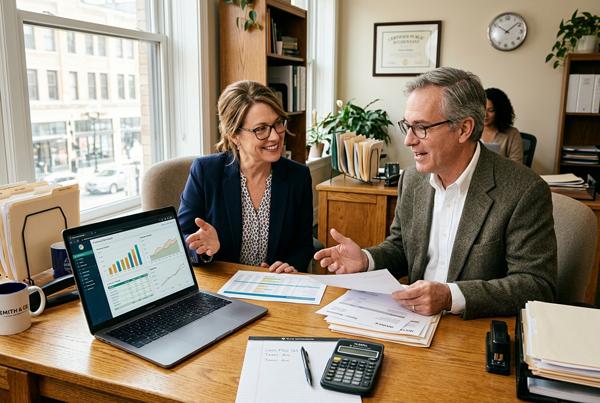
1. Understand What a CPA Does
A Certified Public Accountant is a licensed accounting professional who helps individuals and organizations manage financial information and meet accounting and tax obligations.
Common CPA responsibilities include:
- Preparing and reviewing individual and business tax returns.
- Auditing financial statements and evaluating internal controls.
- Preparing financial reports and analyzing business performance.
- Advising companies on budgets, cash flow, and financial planning.
- Supporting tax compliance and financial decision-making.
- Representing eligible clients before the Internal Revenue Service (IRS).
CPAs work in public accounting firms, private companies, government agencies, nonprofit organizations, and financial institutions.
Some professionals specialize in taxation, while others focus on auditing, corporate accounting, financial analysis, or technology-related controls.
2. Meet the CPA Education Requirements
Education is one of the first requirements to consider. In the United States, CPA licensing requirements are established by individual state boards of accountancy, so the required qualifications differ by jurisdiction.
Traditionally, candidates have followed two main education pathways:
A third pathway has also been introduced in the updated model licensing framework:
The third pathway is being adopted by individual jurisdictions at different rates. It is not automatically available in every state.
NASBA+2
What If You Have an International Degree?
International candidates may also pursue the U.S. CPA qualification, but their education generally needs to be evaluated against the requirements of the jurisdiction where they intend to apply.
Depending on the state, you may need:
- A recognized bachelor's or postgraduate degree.
- An evaluation of international academic credentials.
- Specific accounting and business coursework.
- Additional college credits to meet educational requirements.
An international education evaluation does not automatically establish eligibility in every state. Confirm that the evaluation is suitable for your intended jurisdiction.
NASBA+1
3. Pass the Four CPA Exam Sections
Passing the Uniform CPA Examination is a mandatory part of becoming a licensed CPA.
The examination follows a Core + Discipline structure consisting of four sections. Candidates must pass three required Core sections and select one Discipline section.
AUD, FAR, and REG are compulsory. For the fourth section, you choose BAR, ISC, or TCP based on your interests and professional strengths.
Each section lasts four hours, and candidates must achieve a scaled score of at least 75 out of 99 on each section.
aicpa-cima.com+2
4. Complete the Professional Experience Requirements
Passing the CPA Exam does not automatically grant you a CPA license. You must also satisfy your jurisdiction's professional experience requirements.
Many traditional licensing pathways require approximately one year of qualifying accounting experience. Under the newer bachelor's-plus-experience pathway, two years may be required.
Experience requirements can include:
- Working in public accounting or an approved private accounting position.
- Performing accounting, auditing, taxation, or financial reporting duties.
- Having your work experience verified by an appropriately licensed CPA.
- Meeting specific supervision and documentation requirements.
Some jurisdictions accept different types of professional experience, including qualifying government, industry, academic, or part-time work.
Check the applicable state board rules before assuming that your current job or internship will count toward the requirement.
NASBA+2
5. Complete Additional Ethics and Licensing Requirements
Some states require candidates to complete an ethics examination or additional professional requirements before issuing a CPA license.
The final licensing process may include:
- Submitting proof of completed education.
- Providing verification of qualifying work experience.
- Passing the CPA Exam.
- Completing any required ethics examination or coursework.
- Submitting the licensing application and applicable fees.
- Meeting other state-specific requirements.
Once the relevant state board approves your application, you can receive your CPA license.
Remember that the United States does not have one national CPA license. Licenses are issued by individual state and jurisdictional boards.
NASBA+1
6. How Long Does It Take to Become a CPA?
The time required depends on your educational background, licensing pathway, professional experience, and examination preparation schedule.
Here is an illustrative timeline:
These stages can overlap. For example, some candidates complete professional experience while preparing for or taking the CPA Exam.
A candidate following the traditional 150-credit pathway may need more time than someone who already has the required education and qualifying work experience.
The best approach is to check your state's requirements first and build your schedule around the specific pathway available to you.
7. Create an Effective CPA Exam Study Plan
A structured study plan can help you balance examination preparation with work, education, and other responsibilities.
Many candidates prefer to prepare for one section at a time.
Example: Six-Month CPA Study Plan
This is an example rather than a guaranteed schedule. Some candidates need more time, particularly if they are new to accounting or have demanding work commitments.
Effective Study Strategies
Use official examination blueprints. The AICPA publishes blueprints explaining the subjects and skills tested in each section.
Practice multiple-choice questions. Regular practice helps you identify knowledge gaps and understand how accounting concepts are tested.
Work on task-based simulations. Learn to analyze financial information, interpret documents, and solve practical accounting problems.
Take timed mock examinations. Practice under realistic conditions to improve your time management and identify weak areas.
Review mistakes consistently. Understanding why an answer is incorrect is often more valuable than simply memorizing the correct answer.
8. How Much Does It Cost to Become a CPA?
The total cost depends on your state, education pathway, examination attempts, and choice of study materials.
Common expenses include:
There is no single nationwide price for becoming a CPA. Examination and licensing fees vary by jurisdiction, while education and review-course expenses depend on the provider.
To estimate your budget, check your state board's current fee schedule and compare several CPA review programs before purchasing a package.
9. Where to Apply and Find Official CPA Resources
The application process generally begins with selecting the jurisdiction where you intend to obtain your CPA license.
Useful resources include:
- NASBA: Provides examination application guidance, candidate information, and jurisdiction-specific resources. Visit NASBA.
- AICPA: Develops the CPA Exam and publishes examination blueprints and preparation resources. Visit AICPA.
- State Boards of Accountancy: Provide official education, experience, application, and licensing requirements for each jurisdiction.
- CPA Review Providers: Offer structured study courses, practice questions, simulations, and mock examinations.
If you earned your degree outside the United States, check the international education evaluation process before submitting your application.
10. Common Mistakes to Avoid
Candidates can save time and money by avoiding several common mistakes:
- Choosing a state without checking its requirements: Education and experience rules differ by jurisdiction.
- Assuming 150 credits are mandatory everywhere: Alternative licensing pathways are being introduced in some states.
- Ignoring experience requirements: Passing all four examination sections is not the same as receiving a license.
- Studying without a clear schedule: An inconsistent routine can delay examination progress.
- Choosing a Discipline without research: Select the section that best matches your knowledge and career interests.
- Forgetting credit expiration rules: You must pass all four sections within the examination credit period applicable to your jurisdiction.
Planning ahead can help you avoid unnecessary coursework, additional expenses, and delays in obtaining your license.
Conclusion
Becoming a CPA involves several important steps: meeting educational requirements, passing four CPA Exam sections, completing qualifying professional experience, and satisfying any additional ethics and licensing requirements.
Start by selecting the state where you intend to become licensed and checking its current education and experience pathways. Then create a realistic study plan, compare preparation resources, and organize your examination schedule.
Whether you are an accounting student, an experienced professional, or an international candidate, understanding the process early can help you make better decisions and move toward earning your CPA credential with greater confidence.