PMP Exam Guide: Exam Format, Question Types, Costs and Preparation Tips
The Project Management Professional (PMP) certification is one of the best-known credentials in project management. This guide explains what to expect and how to prepare for the exam.
1. What Is the PMP Certification?
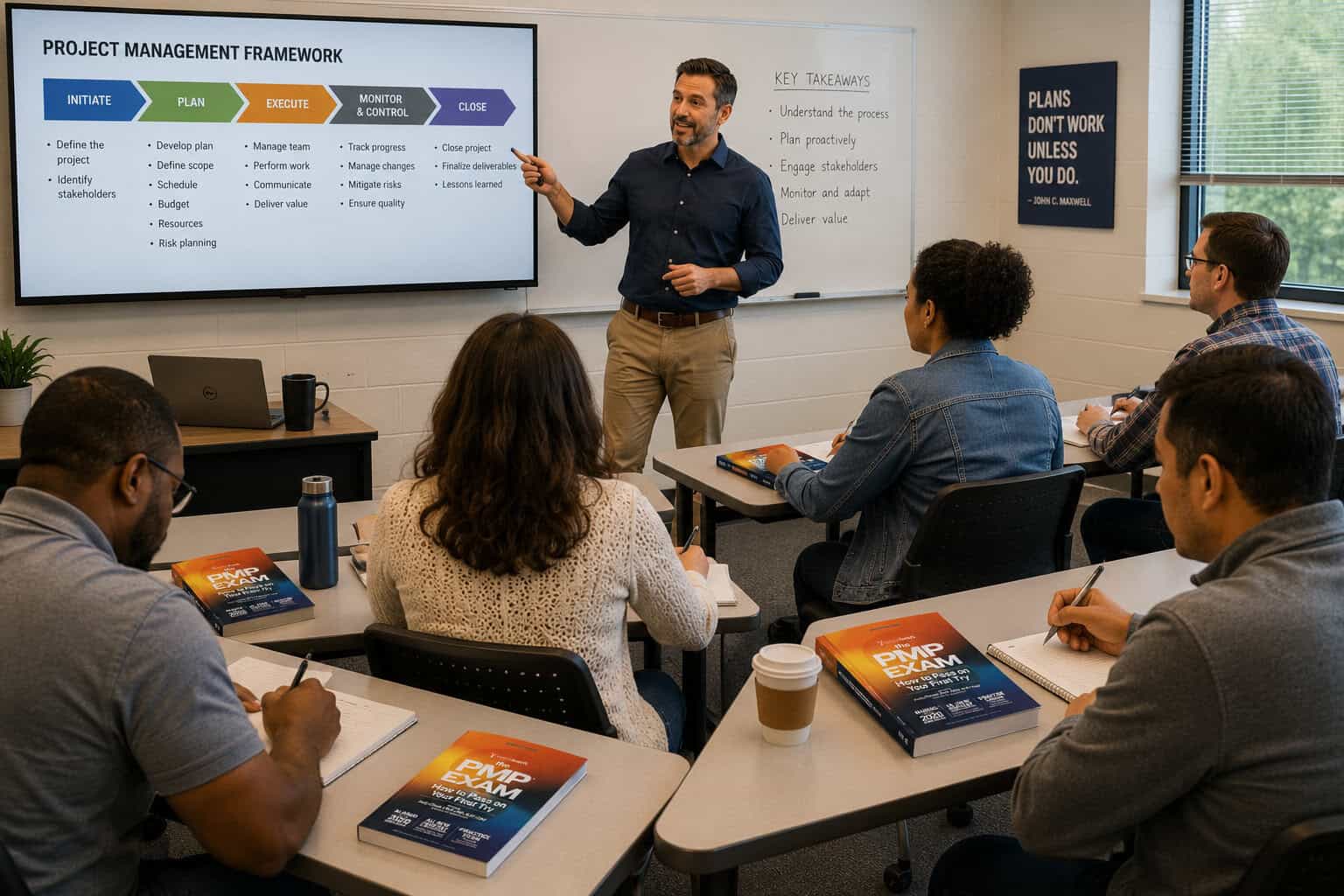
The PMP certification demonstrates that a professional has knowledge and practical experience in project management. It covers different project delivery approaches, including predictive, agile, and hybrid methods.
The certification is relevant to professionals working in industries such as:
- Information technology and software development
- Construction and engineering
- Healthcare and pharmaceutical services
- Finance and banking
- Manufacturing and operations
- Consulting and business services
PMP certification is not limited to people with the job title of project manager. Team leaders, project coordinators, program professionals, and experienced specialists may also find it relevant to their career development.
2. PMP Exam Eligibility Requirements
Before registering for the exam, candidates must meet PMI's education and project management experience requirements.
PMI's current requirements generally include the following pathways:
In addition, applicants generally need 35 hours of project management education or training, unless they hold an active CAPM certification.
The experience must involve leading or managing projects in a professional setting. Overlapping project months cannot be counted twice. PMI also provides specific guidance on which project experience qualifies.
3. PMP Exam Format and Duration
The PMP examination is designed to evaluate both project management knowledge and practical decision-making.
According to PMI's 2026 exam information:
- Total questions: 180
- Exam duration: 240 minutes (4 hours)
- Scored questions: 170
- Unscored pretest questions: 10
- Scheduled breaks: Two 10-minute breaks
- Exam delivery: Authorized testing center or online proctored examination
The exam is available in multiple languages, including English, Chinese, Japanese, and Korean.
The 2026 exam update places greater emphasis on real-world project situations, practical decision-making, and business outcomes.
4. What Topics Does the PMP Exam Cover?
The current PMP exam is divided into three major domains.
The Process domain carries the largest percentage, but candidates should prepare for all three areas.
The exam also covers predictive, agile, and hybrid project management approaches. Approximately 40% of questions represent predictive approaches, while the remaining 60% cover adaptive and hybrid approaches.
The updated exam also introduces greater emphasis on topics such as artificial intelligence, sustainability, stakeholder engagement, and value delivery.
5. Common PMP Exam Question Types
Candidates should expect different question formats rather than relying exclusively on traditional multiple-choice questions.
Common formats include:
- Single-answer multiple choice: Select the best response from several options.
- Multiple-response questions: Choose more than one correct answer.
- Drag-and-drop questions: Match concepts, arrange steps, or connect related information.
- Scenario-based questions: Analyze a project situation and determine the most appropriate action.
- Case-study and practical questions: Apply project management knowledge to realistic situations, potentially involving tools and data.
Scenario-based questions are particularly important because they test how candidates apply project management principles rather than simply memorize definitions.
6. How Much Does the PMP Exam Cost?
The exam fee depends on PMI membership status and applicable regional pricing.
PMP examination fees
PMI member price
$405
Non-member price
$655
USD reference prices published by PMI. Taxes, regional pricing, membership costs, and other fees may affect the total expense.
Other potential expenses include:
- PMP preparation courses
- Practice examinations and study subscriptions
- Project management textbooks and study materials
- PMI membership fees, if you choose to join
- Retake fees if you do not pass
Before purchasing a course or membership, compare the total expected cost rather than looking only at the examination fee.
7. Effective PMP Exam Preparation Tips
A structured study plan can make preparation more manageable.
1. Understand the exam content outline
Start with PMI's official 2026 Exam Content Outline. Use the three domains to organize your study schedule.
2. Complete the required training
Choose a recognized 35-hour project management education course. Pay attention to PMI's upcoming training eligibility changes: from December 1, 2026, live instructor-led courses must meet specific provider requirements, while eligible self-paced courses remain an option.
PMI+1
3. Study different project management approaches
Understand predictive, agile, and hybrid methods. Learn when each approach is appropriate and how project managers respond to changing circumstances.
4. Practice scenario-based questions
Do not focus entirely on memorizing terminology. Practice identifying stakeholder needs, evaluating risks, resolving conflicts, and selecting appropriate actions.
5. Take full-length mock exams
Simulate the four-hour examination environment to improve concentration, pacing, and time management.
6. Review mistakes carefully
After each practice test, identify why an answer was incorrect. Understanding the reasoning behind the correct response is more valuable than simply memorizing answers.
8. How Long Does It Take to Prepare for the PMP Exam?
Preparation time depends on your project management experience, familiarity with the exam topics, and available study hours.
A practical preparation schedule might look like this:
This eight-week plan is a starting point rather than a guaranteed preparation period. Candidates with limited project management knowledge may need additional time.
Conclusion
The PMP certification can be a valuable professional credential for people seeking to demonstrate project leadership, technical knowledge, and business management capabilities.
Before applying, check your eligibility, understand the latest examination requirements, and calculate the full cost of preparation. With a structured study plan, regular practice, and a clear understanding of predictive, agile, and hybrid project management, you can approach the PMP exam with greater confidence.